
Filter
Showing 91–99 of 220 results


By the end of this course, participants will be able to evaluate strategic growth opportunities, analyze investment decisions using value-based metrics, design competitive commercial models, and align operational execution with long-term shareholder value objectives.

Front Line Sales, Recruitment and Leadership for Sales in Banking, Financial Services and Insurance

By the end of this course, participants will be able to execute structured sales processes, recruit and onboard effective sales professionals, coach and monitor performance, apply leadership techniques to motivate teams, and drive sustainable revenue growth while ensuring regulatory compliance.

By the end of this course, participants will be able to design comprehensive Quality Assurance frameworks for Advanced Driver Assistance Systems, apply risk-based validation methods, manage hardware and software testing integration, and ensure compliance with automotive functional safety requirements.

By the end of this course, participants will be able to design Zero Defect manufacturing strategies, integrate digital quality tools, apply real-time data analytics for defect prevention, and implement Quality 4.0 frameworks to improve production reliability and reduce quality costs.

By the end of this course, participants will be able to interpret global regulatory guidelines, develop regulatory submission strategies, prepare compliant dossiers, manage health authority communications, and ensure inspection readiness across the product lifecycle.

By the end of this course, participants will be able to interpret environmental datasets, apply Artificial Intelligence forecasting techniques, improve short-term and long-term wind energy predictions, and integrate predictive insights into operational and grid coordination strategies.

By the end of this course, participants will be able to analyze wind farm performance challenges, interpret turbine interaction data, apply quantum-inspired optimization models for layout and efficiency improvement, and implement simulation-driven operational strategies to enhance energy production and reduce downtime.
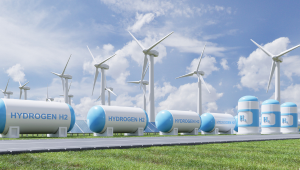

By the end of this course, participants will understand the operational principles of turbine aerodynamics, the role of acoustic waves in airflow optimization, and how sonic modulation can enhance rotational efficiency. They will be able to identify performance gaps, apply acoustic enhancement techniques, interpret operational performance data, and implement efficiency-improvement strategies within wind energy operations.

By the end of this program, participants will be able to design scalable enterprise architectures, implement reliability and SRE frameworks, establish secure and compliant engineering governance models, leverage AI and automation to enhance operational efficiency, prioritize technical debt modernization initiatives, connect engineering metrics such as DORA to business KPIs, and implement structured governance and decision-making frameworks that drive measurable business impact.