
Filter
Showing 109–117 of 235 results


Participants will be able to develop annual and lifecycle-based publication plans, align publications with clinical milestones, apply authorship and transparency standards, ensure compliance with global publication ethics, manage cross-functional coordination, and measure scientific impact. They will strengthen the credibility and strategic value of medical communications within their organization.

Participants will be able to structure scientific documents effectively, interpret and present clinical data accurately, apply regulatory writing standards, ensure logical flow and clarity, maintain compliance with documentation guidelines, and manage document lifecycle processes. They will improve efficiency, accuracy, and professional credibility in scientific communication.

Participants will be able to develop compliant briefing books, create scientifically accurate slide decks, document discussions effectively, manage conflict-of-interest disclosures, prepare meeting minutes aligned with regulatory standards, and synthesize advisory insights into strategic recommendations. They will enhance the impact and governance integrity of Advisory Board engagements.


Participants will be able to design and configure SCADA architectures, analyze turbine and farm-level performance data, implement advanced alarm and fault management strategies, integrate predictive analytics, and develop optimization frameworks that increase energy yield and operational reliability.

Participants will be able to assess degradation risks, select appropriate nano-coating technologies, evaluate performance testing data, design surface protection strategies, and implement lifecycle optimization plans that improve turbine longevity and reduce maintenance expenditure.
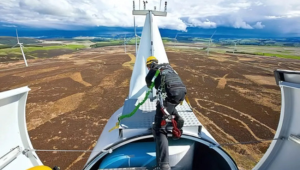
Participants will understand electrostatic charge generation principles, analyze particulate adhesion mechanisms, evaluate electrostatic precipitation systems for blade applications, design contamination control strategies, and implement preventive maintenance frameworks that improve aerodynamic performance and turbine reliability.

Participants will be able to analyze wake behavior using engineering models, apply wake steering techniques, design optimized turbine layouts, evaluate secondary energy capture methods, and implement performance improvement strategies that enhance overall wind farm productivity and reduce operational losses.

Participants will be able to interpret acoustic emission data, differentiate normal and abnormal sound signatures, identify early-stage mechanical faults, integrate acoustic diagnostics with vibration and SCADA data, implement predictive maintenance frameworks, and reduce downtime through proactive fault detection.


Participants will be able to conduct Business Impact Analysis (BIA), define Recovery Time Objectives (RTO) and Recovery Point Objectives (RPO), design continuity strategies, establish crisis management governance structures, implement testing and simulation frameworks, maintain documentation for certification audits, and strengthen enterprise resilience across critical functions.