Participants will develop the ability to assess motor–pump system performance, analyze energy consumption patterns, and implement optimization techniques to improve operational efficiency. They will learn how to identify system losses, evaluate equipment performance, and apply energy management practices that reduce operational costs while maintaining system reliability.
Participants will develop the ability to manage liquidity positions, evaluate funding strategies, and analyze interest rate and market risks affecting treasury operations. They will learn how to optimize asset-liability management decisions, support balance sheet planning, and contribute to strategic treasury governance within banking organizations.
Participants will develop the ability to interpret International Financial Reporting Standard 17 requirements, understand insurance contract valuation models, and analyze the financial reporting impact on insurance organizations. They will learn how to evaluate contractual service margin calculations, support compliant financial disclosures, and strengthen governance around insurance reporting processes.
Participants will develop the ability to evaluate AML risks, implement effective monitoring frameworks, and strengthen institutional compliance programs. They will learn how to detect suspicious transaction patterns, manage AML investigations, and support regulatory reporting processes that protect financial institutions from financial crime exposure.
Participants will develop the ability to understand Basel III regulatory frameworks, evaluate capital and liquidity risk exposures, and apply compliance practices that strengthen financial stability. They will learn how to interpret regulatory ratios, support risk monitoring, and contribute to robust compliance systems within banking institutions.
Participants will develop the ability to analyze operational and transactional data, apply automation tools to streamline processes, and design data-driven workflows in financial services environments. They will learn how to transform raw financial data into actionable insights that improve operational efficiency, risk monitoring, and service performance.
Participants will develop the ability to interpret yield data, identify defect trends, and conduct systematic failure analysis in semiconductor devices. They will learn how to apply reliability testing methods, diagnose device-level failures, and implement corrective actions that enhance product reliability and manufacturing yield.
Participants will develop the ability to apply modern AI tools to automate routine IT tasks, enhance collaboration, and support data-driven decision making. They will learn how to design AI-enabled workflows, evaluate suitable tools for different operational needs, and implement practical automation strategies that improve efficiency across IT teams.
Participants will develop the ability to analyze combustion behavior in internal combustion engines using engineering data and diagnostic techniques. They will learn how to interpret combustion parameters, optimize air–fuel mixing, and apply advanced practices that improve engine efficiency, emissions performance, and overall powertrain development outcomes.
Participants will develop the ability to evaluate pharmaceutical capital investments using financial modeling, clinical development insights, and regulatory risk assessment. They will learn how to assess project feasibility, estimate long-term value, and prioritize investment opportunities that support innovation, regulatory compliance, and sustainable business growth.
Participants will understand how sustainable materials, green manufacturing processes, and circular economy strategies are transforming tyre production. They will learn how tyre manufacturers reduce carbon emissions, optimize resource utilization, and develop environmentally responsible tyres while maintaining safety, durability, and performance standards.
Participants will understand how Industry 4.0 technologies such as industrial IoT, machine data analytics, connected production systems, and digital twins improve tyre manufacturing operations. They will learn how to implement smart factory systems to enhance process visibility, predictive maintenance, quality control, and production efficiency in modern tyre plants.
Participants will develop a deep understanding of rubber material science and compounding techniques used in high-performance tyre manufacturing. They will learn how different polymers, fillers, and additives influence tyre performance characteristics such as wear resistance, traction, and rolling resistance. The program will also build practical knowledge on compound formulation, processing conditions, and quality control techniques used to produce consistent high-performance tyre materials. By the end of the course, participants will be able to evaluate and optimize rubber compounds to meet demanding automotive performance requirements.
Participants will develop a clear understanding of modern tyre manufacturing technologies, advanced materials, and automation systems used in contemporary production facilities. They will learn how tyre design requirements translate into manufacturing processes, how digital manufacturing tools improve production quality, and how emerging technologies such as smart manufacturing and sustainable materials are transforming tyre production. By the end of the program, participants will be able to evaluate and implement modern manufacturing technologies to improve efficiency, quality, and operational performance.
Participants will learn how pharmaceutical products are costed and priced across global markets while considering regulatory controls, reimbursement frameworks, and competitive dynamics. They will develop the ability to evaluate drug development costs, design value-based pricing models, and create international pricing strategies aligned with market access objectives and profitability goals.
Participants will develop a clear understanding of risk assessment frameworks used in food manufacturing. They will learn how to identify potential hazards across production processes, evaluate the likelihood and severity of risks, and implement preventive and corrective control measures. The program will also build capabilities in developing structured risk management systems that align with global food safety standards and regulatory expectations. By the end of the course, participants will be able to design and implement risk management strategies that strengthen operational resilience and product safety.
Participants will gain a clear understanding of international trade regulations and customs procedures relevant to FMCG products. They will learn how to manage import and export documentation, classify goods under tariff systems, and ensure regulatory compliance across borders. The program will also build capabilities in identifying compliance risks, coordinating with customs authorities and logistics partners, and implementing best practices that improve efficiency in cross-border supply chain operations.
Participants will develop a clear understanding of global regulatory frameworks governing food additives, preservatives, and novel foods. They will learn how regulatory authorities evaluate safety, establish permissible usage limits, and approve new food ingredients. The program will build capabilities in interpreting regulatory standards, managing ingredient compliance documentation, and navigating approval pathways for novel foods. By the end of the course, participants will be able to support regulatory submissions, ensure labeling compliance, and manage risks associated with new food ingredient innovation.
Participants will gain a clear understanding of different forms of food fraud and adulteration and their impact on food safety, brand reputation, and regulatory compliance. They will learn how to conduct vulnerability assessments across supply chains, implement authenticity testing methods, and establish preventive control systems. The program will also build capabilities in supplier risk management, fraud monitoring, and compliance with global food safety standards that address authenticity risks.
Participants will develop a comprehensive understanding of loyalty program design and consumer engagement strategies in modern retail ecosystems. They will learn how to build loyalty platforms that integrate with retail technology systems, analyze customer behavior data, and personalize engagement initiatives. The program will also build capabilities in scaling loyalty initiatives across omnichannel retail environments while measuring program effectiveness and return on investment. By the end of the course, participants will be able to design sustainable loyalty ecosystems that enhance customer engagement and maximize lifetime value.
Participants will gain a clear understanding of how key retail technology modules interact within modern retail ecosystems and how they support operational workflows. They will learn how to map retail processes, integrate digital systems across departments, and develop structured SOP frameworks that standardize operations. The program will also build capabilities in documenting procedures, managing cross-functional coordination, and improving operational efficiency. By the end of the course, participants will be able to design scalable SOP frameworks and ensure effective system integration across retail operations.
Participants will gain a strong understanding of global regulatory frameworks governing food packaging safety and compliance. They will learn how to evaluate packaging materials for food-contact suitability, assess chemical migration risks, and interpret regulatory limits established by international authorities. The program will also build expertise in packaging compliance documentation, safety testing requirements, and regulatory approval processes. By the end of the course, participants will be able to ensure that food packaging systems meet safety standards while supporting global market access for FMCG products.
Participants will gain a clear understanding of the key global food safety frameworks and their role in ensuring safe food production and supply chain integrity. They will learn how standards such as ISO 22000, GFSI-recognized schemes, and BRCGS establish requirements for hazard control, traceability, and food safety management. The program will also build capabilities in implementing food safety systems, preparing for certification audits, and managing compliance across global supply chains. By the end of the course, participants will be able to strengthen food safety governance and align organizational practices with internationally recognized standards.
Participants will gain a comprehensive understanding of HACCP principles and their application in pharmaceutical production environments. They will learn how to conduct hazard analysis, identify critical control points, and establish monitoring and corrective action mechanisms. The program will also build expertise in integrating preventive controls into quality management systems, managing documentation, and preparing for regulatory audits. By the end of the course, participants will be able to design risk-based control systems that enhance product safety, regulatory compliance, and operational reliability.
Participants will gain a clear understanding of GMP principles and their role in ensuring safe food manufacturing operations. They will learn how to design hygienic production environments, implement effective sanitation and contamination control measures, and establish quality monitoring systems across manufacturing processes. The program will also build capabilities in managing documentation, regulatory inspections, and continuous improvement initiatives. By the end of the course, participants will be able to strengthen GMP compliance while improving operational reliability and product quality.
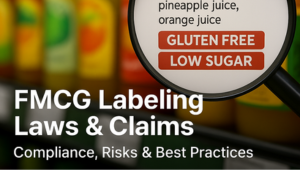
Participants will gain a clear understanding of the regulatory frameworks governing labeling and product claims in the FMCG industry. They will learn how to structure compliant labels, evaluate permissible marketing claims, and ensure accurate consumer information disclosure. The program will also build expertise in identifying regulatory risks associated with labeling errors, substantiating claims with evidence, and implementing internal review processes. By the end of the course, participants will be able to support compliant labeling strategies that align regulatory requirements with marketing objectives.
Participants will gain a comprehensive understanding of the regulatory framework governing medical devices in Canada. They will learn how device classification determines regulatory pathways and how to prepare submissions for Medical Device Licenses. The program will also build knowledge of quality management system requirements, post-market surveillance responsibilities, and regulatory documentation expectations. By the end of the course, participants will be able to support successful regulatory submissions and maintain compliance with Health Canada requirements.
Participants will gain a clear understanding of the regulatory framework governing pharmaceutical importers and distributors. They will learn how supply chain processes must align with regulatory requirements related to product verification, traceability, documentation, and storage conditions. The program will help professionals understand the roles and responsibilities of economic operators in maintaining product quality and compliance across the distribution network. By the end of the program, participants will be able to implement compliant supply chain practices that support regulatory readiness and product integrity.
Participants will gain the ability to understand the European regulatory framework governing medical device commercialization and evaluate how regulations influence market access strategy. They will learn how to assess device classification, conformity assessment routes, and CE marking requirements when planning EU entry. The program will also strengthen the ability to analyze notified body engagement, clinical evidence expectations, and post-market compliance obligations. By the end of the program, participants will be able to develop a structured market access roadmap and make informed go-to-market decisions for medical device products.
Participants will gain the capability to interpret EU MDR requirements, design regulatory pathways for CE marking, prepare compliant technical documentation, and manage post-market obligations for medical devices in the European market.
Participants will gain the ability to design risk-based audit programs, conduct internal and supplier audits, evaluate findings, and implement effective CAPA systems to strengthen quality compliance.
Participants will gain the ability to establish quality controls for clinical investigations, evaluate study documentation for compliance, and support inspection readiness under ISO 14155 requirements.
Participants will gain the ability to understand BS-VI emission regulations for three-wheelers, interpret emission testing results, and support certification and compliance management activities during vehicle development and approval.
Participants will gain the ability to understand BS-VI emission requirements for two-wheelers, evaluate emission testing results, and support regulatory certification and compliance management activities.
Participants will gain the ability to understand BS-VI emission regulations, support emission testing programs, evaluate compliance results, and contribute to vehicle certification and regulatory approval processes.
Participants will gain the ability to prepare for regulatory inspections, evaluate compliance gaps, manage audit interactions, and develop corrective and preventive actions following regulatory observations.
Participants will gain the ability to understand engine electronic architectures, diagnose EMS faults using professional diagnostic tools, and support compliance with emission and safety regulations.
Participants will gain the ability to understand RDE regulatory requirements, design compliant testing strategies, interpret emissions measurement data, and support vehicle certification and regulatory compliance activities.
Participants will gain the ability to analyze pharmaceutical cost structures, design strategic pricing models for different markets, and balance profitability with regulatory and market access requirements.
Participants will gain the ability to analyze global pharmaceutical industry structures, understand evolving business models, interpret emerging market trends, and identify strategic opportunities across developed and emerging markets.
Participants will gain the ability to evaluate non-US pharmaceutical markets, understand regional regulatory pathways, design market entry strategies, and build partnerships that support sustainable international growth for Indian pharmaceutical companies.
Participants will gain the ability to evaluate non-US pharmaceutical markets, understand regional regulatory pathways, design market entry strategies, and build partnerships that support sustainable international growth for Indian pharmaceutical companies.
Participants will gain the ability to manage cold chain infrastructure, operate key refrigeration and monitoring equipment, detect and prevent temperature excursions, and ensure operational reliability across refrigerated warehouses and transport systems.
Participants will gain the capability to interpret VDA 6.x requirements, prepare for process and system audits, evaluate manufacturing processes using VDA methodologies, and implement quality improvement actions that meet German OEM supplier compliance expectations.
Participants will gain the ability to understand ASPICE framework structure, apply software development process standards in automotive control systems, align engineering practices with ASPICE capability levels, and support readiness for ASPICE process assessments.
Participants will develop the ability to align supplier operations with OEM requirements and regulatory frameworks. They will learn how to manage supplier compliance, coordinate program timelines with OEM partners, and strengthen supply chain collaboration to support successful product launches and uninterrupted component supply.
Participants will develop the ability to design structured testing and validation plans aligned with crashworthiness, electromagnetic compatibility, and environmental compliance standards. They will learn how to interpret global testing regulations, manage certification workflows, analyze test results, and integrate testing requirements into product development to ensure regulatory approval and product safety.
Participants will gain the ability to identify and classify non-conformities, conduct structured root cause analysis, design effective CAPA plans, and implement audit-ready documentation systems aligned with automotive quality standards and regulatory expectations.
Participants will gain the capability to conduct Design FMEA and Process FMEA, evaluate failure risks using severity, occurrence, and detection metrics, prioritize corrective actions, and integrate risk assessment into automotive quality management and product development processes.
Participants will gain the capability to implement functional safety and cybersecurity processes across automotive product development, conduct hazard and risk analysis, integrate cybersecurity requirements into system design, and manage safety compliance across the vehicle lifecycle. They will also learn to coordinate safety and cybersecurity validation activities aligned with international automotive standards.
Participants will gain the capability to establish supplier quality management frameworks, perform structured supplier audits, analyze supplier performance metrics, and implement corrective and preventive actions with suppliers. They will also learn to drive continuous improvement initiatives across supplier ecosystems using data-driven monitoring systems and collaborative quality programs.
Participants will gain the capability to interpret automotive regulations, understand certification and homologation requirements, and integrate compliance into quality management systems. They will be able to map regulatory requirements to vehicle systems, prepare documentation for approval processes, and support cross-functional compliance across engineering, quality, and regulatory teams.
Participants will learn how to interpret and implement key ISO standards within automotive quality management systems. They will develop the ability to align processes with global compliance requirements, strengthen internal audit readiness, manage supplier quality standards, and integrate ISO frameworks into continuous improvement initiatives across manufacturing operations.
Participants will develop the capability to manage BIS certification processes, interpret Indian automotive regulatory standards, coordinate testing and documentation requirements, and ensure components and vehicles meet mandatory compliance requirements before market introduction.
Participants will develop the capability to manage homologation processes, interpret regulatory certification frameworks across markets, coordinate testing and documentation requirements, and ensure vehicles achieve regulatory approval efficiently while minimizing launch delays and compliance risks.
Participants will develop the capability to implement structured supplier compliance frameworks, conduct regulatory and quality audits, manage compliance documentation such as PPAP and IMDS submissions, monitor supplier risk across multi-tier supply chains, and build governance mechanisms that ensure regulatory, environmental, and quality compliance across OEM and Tier-1 supplier ecosystems.
Participants will develop the capability to interpret global and Indian sustainability regulations, implement ISO-based environmental management systems, conduct lifecycle sustainability analysis, map operational emissions, and design practical compliance strategies aligned with modern green mobility requirements.
Participants will develop the ability to design structured prompts for financial analysis, regulatory interpretation, and strategic planning. They will learn how to use generative AI tools to synthesize complex financial information, generate analytical insights, and support leadership decision-making while ensuring responsible and compliant AI usage.
Participants will gain the ability to interpret global automotive regulatory frameworks, manage homologation and certification processes, establish compliance monitoring systems, and coordinate regulatory requirements across engineering, manufacturing, and legal teams to ensure vehicles meet evolving safety, environmental, and digital compliance standards.
By the end of this course, participants will be able to execute structured sales processes, recruit and onboard effective sales professionals, coach and monitor performance, apply leadership techniques to motivate teams, and drive sustainable revenue growth while ensuring regulatory compliance.
By the end of this course, participants will be able to design comprehensive Quality Assurance frameworks for Advanced Driver Assistance Systems, apply risk-based validation methods, manage hardware and software testing integration, and ensure compliance with automotive functional safety requirements.
By the end of this course, participants will be able to design Zero Defect manufacturing strategies, integrate digital quality tools, apply real-time data analytics for defect prevention, and implement Quality 4.0 frameworks to improve production reliability and reduce quality costs.
By the end of this course, participants will be able to interpret global regulatory guidelines, develop regulatory submission strategies, prepare compliant dossiers, manage health authority communications, and ensure inspection readiness across the product lifecycle.
By the end of this course, participants will be able to interpret environmental datasets, apply Artificial Intelligence forecasting techniques, improve short-term and long-term wind energy predictions, and integrate predictive insights into operational and grid coordination strategies.
By the end of this course, participants will be able to analyze wind farm performance challenges, interpret turbine interaction data, apply quantum-inspired optimization models for layout and efficiency improvement, and implement simulation-driven operational strategies to enhance energy production and reduce downtime.
Participants will be able to analyze atmospheric electric field behavior, evaluate energy capture mechanisms, design conditioning and storage interfaces, assess grid integration constraints, and develop techno-economic feasibility models for atmospheric electricity-based storage systems.
Participants will be able to design and configure SCADA architectures, analyze turbine and farm-level performance data, implement advanced alarm and fault management strategies, integrate predictive analytics, and develop optimization frameworks that increase energy yield and operational reliability.
Participants will be able to assess degradation risks, select appropriate nano-coating technologies, evaluate performance testing data, design surface protection strategies, and implement lifecycle optimization plans that improve turbine longevity and reduce maintenance expenditure.
Participants will understand electrostatic charge generation principles, analyze particulate adhesion mechanisms, evaluate electrostatic precipitation systems for blade applications, design contamination control strategies, and implement preventive maintenance frameworks that improve aerodynamic performance and turbine reliability.
Participants will be able to analyze wake behavior using engineering models, apply wake steering techniques, design optimized turbine layouts, evaluate secondary energy capture methods, and implement performance improvement strategies that enhance overall wind farm productivity and reduce operational losses.
Participants will be able to interpret acoustic emission data, differentiate normal and abnormal sound signatures, identify early-stage mechanical faults, integrate acoustic diagnostics with vibration and SCADA data, implement predictive maintenance frameworks, and reduce downtime through proactive fault detection.
Participants will be able to interpret hydraulic circuit diagrams, analyze pressure and flow deviations, conduct structured root cause analysis, identify contamination sources, assess component wear patterns, and implement reliability-centered maintenance strategies. They will strengthen operational decision-making in breakdown response, preventive planning, and asset life optimization.
Participants will be able to assess automation readiness, improve Overall Equipment Effectiveness, design smart monitoring systems, reduce downtime through predictive maintenance, and integrate digital manufacturing dashboards into operational decision-making. They will strengthen structured problem-solving in throughput optimization, quality assurance, and cost reduction.
Participants will be able to segment consumers using behavioral and transactional data, interpret purchase frequency and basket composition trends, evaluate promotion effectiveness, forecast demand shifts, and design data-driven go-to-market strategies. They will strengthen decision-making in pricing, assortment planning, channel prioritization, and campaign optimization.
Participants will be able to evaluate channel economics, calculate customer acquisition cost and lifetime value, design pricing and fulfillment strategies, structure digital acquisition funnels, and build scalable direct to consumer operating models. They will strengthen decision-making in channel investment, performance measurement, and growth optimization.
Participants will be able to evaluate packaging life cycles, select sustainable material alternatives, structure extended producer responsibility frameworks, measure waste diversion performance, and integrate circular economy principles into packaging strategy. They will strengthen decision-making in supplier selection, regulatory compliance, cost optimization, and environmental performance reporting.
Participants will be able to assess cyber threat exposure, evaluate cybersecurity control frameworks, interpret vulnerability and penetration testing reports, strengthen third-party cyber oversight, and design structured incident response and recovery plans. They will improve risk-based decision-making related to digital security investments and regulatory preparedness.
Participants will be able to redesign compliance operating models, implement automated monitoring and reporting controls, evaluate surveillance systems, structure risk dashboards, and strengthen regulatory inspection preparedness. They will enhance decision-making in control governance, escalation management, and technology-enabled compliance oversight.
Participants will be able to explain digital payment architecture, manage Unified Payments Interface transaction workflows, monitor settlement and reconciliation processes, identify operational and fraud risks, and implement structured controls to ensure secure and resilient payment operations.
Participants will be able to construct and interpret financial risk models, evaluate model assumptions, apply statistical techniques for risk estimation, conduct stress testing, and support capital and risk reporting decisions using structured analytics frameworks.
Participants will be able to evaluate API-related risk exposure, implement structured open banking risk frameworks, strengthen data protection controls, oversee third-party risk governance, and support regulatory compliance through proactive monitoring and reporting mechanisms.
Participants will be able to evaluate mass drivers at vehicle and subsystem levels, apply material substitution strategies, perform structural optimization assessments, and support cross-functional lightweighting decisions aligned with performance and regulatory requirements.
Participants will be able to analyze multi-source vehicle data, apply reliability and predictive analytics models, interpret telematics-driven performance signals, reduce warranty risk, and support data-driven engineering decisions across the vehicle life cycle.
Participants will be able to interpret global OBD and emission regulations, evaluate compliance risks, align internal processes with regulatory requirements, review emission monitoring data, and support structured regulatory submissions and audit responses.
Participants will be able to explain ADAS system architecture, compare sensor technologies, support sensor fusion integration, interpret validation data, and contribute to structured testing and compliance activities aligned with automotive safety standards.
Participants will be able to explain electric powertrain architecture, design key subsystems including battery, motor, and inverter, apply performance calculations, develop validation plans, interpret test data, and ensure compliance with automotive performance and safety standards.
Participants will be able to analyze supply chain performance metrics, improve demand planning accuracy, optimize inventory deployment, enhance distribution efficiency, and implement structured optimization strategies that improve service levels and profitability.
Participants will be able to conduct structured inspection readiness assessments, strengthen quality systems, manage regulatory interactions professionally, draft defensible observation responses, and implement corrective and preventive actions that withstand regulatory review.
Participants will be able to develop trust-based engagement strategies with healthcare professionals, apply consultative selling techniques, leverage data-driven customer insights, align promotional activities with compliance standards, and execute targeted marketing initiatives to drive sustainable sales performance.
Participants will be able to manage end-to-end pharmacovigilance workflows efficiently, ensure high data quality standards, monitor compliance metrics and SLAs, optimize operational performance, and support audit and regulatory inspection readiness.
Participants will be able to build competitive intelligence frameworks, analyze competitor pipelines and patents, interpret regulatory and clinical trial trends, assess market entry risks, and integrate CI insights into product development and lifecycle strategy decisions.
Participants will be able to identify critical quality attributes (CQA), define critical process parameters (CPP), apply risk assessment and design of experiments (DoE), establish design space, and implement control strategies to ensure optimized and scalable pharmaceutical processes.
Participants will be able to apply ICH-based Quality Risk Management principles, conduct risk assessments using structured tools, integrate risk controls into quality systems, document risk decisions, and maintain a proactive risk-based compliance culture.
Participants will be able to align development strategy with IND, NDA, and ANDA requirements, understand data expectations across development stages, support regulatory documentation, and reduce development risks through early regulatory integration.
Participants will be able to develop qualification protocols, execute IQ, OQ, and PQ activities for laboratory equipment, apply risk-based approaches, ensure proper documentation, and maintain a validated state throughout the equipment lifecycle.
Participants will be able to implement the three-stage process validation lifecycle, define critical process parameters, design validation protocols, analyze process data statistically, and maintain continued process verification aligned with regulatory expectations.
Participants will be able to design and manage a robust pharmaceutical QMS, integrate risk-based decision-making, strengthen deviation and CAPA processes, ensure documentation control, and maintain inspection readiness aligned with global regulatory standards.
Participants will be able to apply SPC tools, construct and interpret control charts, evaluate process capability indices, detect process trends, and integrate statistical monitoring into pharmaceutical quality and validation systems.
Participants will be able to understand core biostatistical concepts, interpret clinical trial data, differentiate between statistical and clinical significance, evaluate study results critically, and collaborate effectively with biostatistics teams.
Participants will be able to understand clinical documentation requirements, manage Trial Master Files effectively, apply document lifecycle controls, ensure regulatory compliance, and maintain audit-ready systems throughout the clinical trial process.
Participants will be able to understand regulatory expectations for medical device process validation, apply risk-based validation principles, execute IQ/OQ/PQ effectively, maintain validation documentation, and ensure ongoing process control in compliance with global regulatory standards.
Participants will be able to apply GDP principles, implement ALCOA+ requirements, write structured and compliant technical documents, prevent documentation errors, and maintain inspection-ready records in accordance with global pharmaceutical regulations.
Participants will be able to interpret and apply ICH-GCP guidelines, ensure ethical conduct of clinical trials, maintain compliant documentation, manage protocol adherence, and prepare for regulatory inspections effectively.
Participants will be able to implement risk-based stability strategies, manage global stability commitments, perform statistical shelf-life analysis, handle excursions and investigations, and ensure inspection readiness across product lifecycle stages.
Participants will be able to design advanced stability protocols, conduct statistical trend analysis, manage deviations and temperature excursions, ensure data integrity compliance, and maintain inspection readiness throughout the product lifecycle.
Participants will be able to develop compliant stability protocols, monitor stability programs, interpret data trends, determine shelf life, and handle deviations effectively while maintaining audit readiness.
Participants will be able to develop accurate finite element models of railway components, apply appropriate boundary conditions and load cases, conduct static, dynamic, and fatigue analysis, and interpret simulation results to support design validation and certification. They will strengthen their ability to reduce physical test iterations and improve structural reliability.
Participants will be able to implement structured unit testing strategies using LDRA, achieve required structural coverage levels, enforce coding standards compliance, generate audit-ready reports, and integrate unit testing into continuous integration pipelines. They will strengthen their ability to reduce defect leakage and improve software reliability in safety-critical automotive systems.
Participants will be able to differentiate AUTOSAR Classic, AUTOSAR Adaptive, and non-AUTOSAR embedded frameworks, design modular ECU architectures, manage software configuration and integration, and make informed framework selection decisions aligned to vehicle program requirements. They will strengthen their capability to improve software scalability, reusability, and long-term platform strategy.
Participants will be able to develop and implement advanced motor control algorithms, optimize torque and efficiency across dynamic load conditions, validate systems using HIL/SIL frameworks, and troubleshoot real-world deployment issues in electric powertrain applications. They will strengthen their capability to translate system requirements into stable and scalable production-ready control architectures.
Participants will be able to plan and implement effective HIL testing strategies, configure test environments, simulate real-world operating and fault conditions, and analyze results to support design decisions. They will strengthen their ability to detect control, integration, and safety issues early in development, reducing downstream validation and launch risks.
Participants will be able to apply GLP and GDP requirements accurately across laboratory and documentation workflows, produce clear and compliant technical documents, and evaluate records for data integrity and inspection readiness. They will strengthen their ability to prevent documentation-related deviations and respond confidently to regulatory scrutiny.
Participants will be able to apply manufacturability principles during early design stages, assess design feasibility across common automotive manufacturing processes, reduce design-induced quality risks, and improve cost, yield, and production readiness without relying on late corrective actions.
Build an integrated approach to product reliability and warranty management by analyzing field failures, applying reliability engineering tools, identifying systemic root causes, and implementing corrective actions that reduce warranty exposure while strengthening OEM confidence and long-term product performance.
Participants will be able to use the Seven Quality Control Tools to identify root causes, monitor process stability, prioritize improvement actions, and improve consistency across agricultural operations and AgriTech-enabled processes.
Participants will be able to assess measurement system capability for both traditional and digital measurement technologies, perform variable and attribute analysis, interpret results with confidence, and apply corrective actions to support reliable quality decisions across automotive production and supply chains.
Participants will be able to perform system-level failure analysis, construct and interpret fault trees, identify critical failure paths, and use FTA outputs to strengthen automotive design robustness, safety assurance, and validation strategies.
Participants will be able to build and integrate Python-based Robot Framework automation for functional, integration, and regression testing, enhance test coverage for embedded and connected systems, and incorporate automation into quality pipelines to improve product reliability and speed to market.
Participants will be able to identify dependent, common-cause, and cascading failures, evaluate interference and independence within automotive systems, and apply DFA techniques during design and validation to reduce system-level risks and improve overall vehicle reliability.
Develop the ability to analyze solar PV module and cell performance, interpret production and testing data, optimize design parameters, and make informed decisions to enhance energy yield and reliability.
Develop the ability to evaluate suppliers on technical and quality capability, assess manufacturing and process readiness, conduct structured supplier audits, manage risk across the supply base, and make procurement decisions that support engineering performance, cost, and delivery objectives.
Develop the ability to analyze client FX exposures, explain FX instruments and payoffs clearly, assess product suitability, structure risk-aligned hedging solutions, and deliver confident, compliant FX advisory conversations across market conditions.
Develop the ability to manage end-to-end engineering operations using PLM systems, control CAD and BOM integrity, execute structured change management, synchronize design with manufacturing and suppliers, and drive disciplined NPI execution with reduced risk and faster time-to-market.
Participants will develop the ability to evaluate risks associated with generative artificial intelligence in financial services, design governance frameworks for responsible AI deployment, and integrate ESG compliance principles into AI-driven processes. They will learn how to ensure transparency, accountability, and regulatory alignment while deploying artificial intelligence solutions in financial institutions.
Build the ability to align HR strategy with retail and e-commerce business goals, lead workforce transformation, strengthen frontline and middle leadership capability, design effective talent and performance systems, and drive engagement and retention in high-velocity operating environments.
Build the capability to interpret UNECE regulations, manage ECE homologation and testing requirements, implement effective Conformity of Production systems, ensure correct regulatory markings, and proactively track regulatory revisions to maintain uninterrupted vehicle and component compliance across domestic and export markets.
Build the capability to interpret vehicle regulations, integrate homologation requirements into engineering decisions, plan approvals proactively, and support compliant vehicle development across markets.
Build the capability to interpret, implement, and audit CQI standards for heat treat, plating, and welding processes to improve process control, compliance, and product quality.
Build the capability to plan and execute strategic B2B sales, manage technically driven buying processes, and grow key accounts in the chemical industry.
Build the capability to apply Design for Assembly and Design for Manufacturing principles to reduce part complexity, improve production efficiency, enhance quality, and accelerate time-to-market.
Build the capability to apply precision selling strategies, tailor value propositions to stakeholder needs, and execute structured sales approaches that improve engagement and commercial outcomes.
Build the capability to manage frontline teams effectively, improve on-floor execution, and drive consistent customer success through structured people management and operational discipline.
Build the capability to analyze RegTech and Fintech trends, evaluate strategic opportunities, and design actionable roadmaps to leverage technology for competitive advantage in banking.
Build the capability to analyze India’s climate-tech landscape in energy, assess emerging technologies, evaluate policy and market drivers, and make informed strategic and investment decisions.
Develop the capability to investigate field failures systematically using the 8D methodology, identify true root causes, implement effective corrective actions, and prevent recurrence while meeting railway quality and safety requirements.
Build the capability to manage dealer networks strategically, improve sales performance, align dealer execution with OEM objectives, and strengthen market coverage and customer experience.
Develop the ability to apply design thinking methods to interpret requirements, improve manufacturability, reduce defects, and implement practical process and product improvements in automotive part manufacturing.
Build the capability to measure software size using Function Point Analysis and develop reliable cost and effort estimates that support planning, sourcing, and development decisions in automotive software programs.
Build the capability to identify dependent failures, analyze failure interactions across systems, and integrate dependent failure analysis into design, validation, and risk assessment activities.
Build the capability to design and manage resilient pharmaceutical supply chains, improve planning accuracy, ensure regulatory compliance, and optimize service levels while controlling cost and risk.
Build the capability to develop, analyze, and apply financial and business models that support investment appraisal, pricing decisions, cost management, and strategic planning in automotive businesses.
Develop the ability to lead high-performing teams, influence stakeholders, make decisive decisions, and foster a culture of accountability and collaboration in consulting projects.
Develop the ability to analyze solar PV module and cell performance, interpret production and testing data, optimize design parameters, and make informed decisions to enhance energy yield and reliability.
Develop the ability to design, plan, and execute advanced blasting operations, optimize fragmentation, enhance safety, and reduce operational costs in mining sites.
Build the capability to plan, assess, and execute controlled explosive and demolition activities safely, minimize operational and environmental risk, and ensure compliance during plant modification or decommissioning activities.
Identify and control waste-related risks across pharma operations while reducing disposal costs through sustainable waste management decisions, improving regulatory compliance and environmental performance in parallel, and implementing waste reduction and recovery initiatives that deliver clear, measurable impact.
Apply clinical trial regulatory requirements seamlessly across planning, conduct, and oversight to prevent common compliance failures that lead to trial delays and inspection findings, while strengthening inspection readiness through disciplined documentation and effective oversight, and enabling informed operational decision-making that consistently safeguards patient safety and ensures data integrity.
Manage safety data to ensure accuracy, consistency, and compliance readiness while analyzing data to proactively identify risks and support sound regulatory decision-making, improving the quality and timeliness of safety-related regulatory reporting and reducing overall compliance risk through disciplined and effective data governance practices.
Build the capability to manage key accounts strategically, strengthen customer relationships, align sales and marketing efforts, and drive profitable growth through structured account planning and execution.
Participants will be able to align production and inventory decisions with patient and market demand signals, reduce stock-outs and excess inventory through demand-driven operational planning, make effective cross-functional decisions during demand volatility and supply constraints, and lead compliant execution changes without disrupting operational stability.
Develops the ability to design, deliver, and evaluate structured training programs that drive measurable behavior change, improve role capability, and support sustained performance improvement across business functions.
Lead manufacturing teams to deliver on-time, right-first-time batches, reduce deviations through disciplined decisions and accountability, use performance data to improve efficiency and compliance, and manage audits and high-pressure operations confidently.
Hint: The password should be at least eight characters long. To make it stronger, use upper and lower case letters, numbers, and symbols like ! " ? $ % ^ & ).